

Telephone Number

01394 286200

Email Address

info@broadsidecca.co.uk

  • Home
  • Customs Clearance
    • Brexit & Customs Clearance
  • UK Delivery
  • If You Wish To Proceed
  • F.A.Q.
  • News
  • Terms
    • Website Waiver
  • Contact
  • Home
  • Customs Clearance
    • Brexit & Customs Clearance
  • UK Delivery
  • If You Wish To Proceed
  • F.A.Q.
  • News
  • Terms
    • Website Waiver
  • Contact

Our Customs Clearance Agent Services
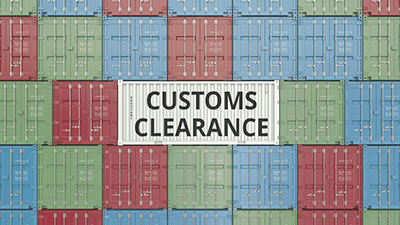
customs-clearance-agentBroadside Customs Clearance Agency have been providing expert customs clearance agent services for many years and offer a unique personal touch to ensure a smooth and stress free completion of the process for our clients.

I’ve listed below some of the important areas of customs clearance that need to be addressed, with a bit of explanation alongside to help understand what happens.

Commodity Codes

(a.k.a HS Codes,Tariff Numbers, BTN Codes, Classification Numbers).

HMRC’s computer system relies on numbers and not words when calculating tax charges for your imported cargo.  That is why we use ten digit commodity codes instead of descriptions.

I must apologise to most importers if a statement in HMRCs online literature comes as a shock to them:

“You, as the importer or exporter are responsible for the correct tariff classification of your goods.  Union Customs Code Regulation 952/2013 Article 15 refers”

https://www.gov.uk/guidance/why-you-must-classify-uk-imports-and-exports

This is because you (or your client) will know the product better than a customs clearance agent, and unlike us, will know what it looks like.  After all, you would have done the research on the product before ordering a large shipment from overseas, and whilst we agents will do our best to show you what choices are available, it is you the importer that HMRC will take legal action against should an incorrect classification code result in underpayment of HMRC taxes.

Even when the mistake is an innocent one, they can make you repay unpaid taxes for up to four years prior to the mistake and this can add up over time, so it is advisable to get this code classified correctly from the start.  If you give Broadside good notice I can email you a form to complete and email onto the customs classification department.  They will email you back the commodity code number which you can pass onto your customs clearance agent (Broadside) so that the right amount of duty, VAT and other taxes are paid on import.

Customs Procedure Codes (PC’s)

I will not bore you with the many codes that we agents short-hand as PCs, but as of 2018 the standard one is: PC 4000 000 – for Home Use Entries (ie with duties payable).

If we use this code, then after we have declared the value of your cargo, the customs computer will take the duty and VAT applied to your classification code, and payment is then arranged to HMRC.

So why do we need more than one PC code?  Well sometimes goods are imported just for a warranty repair (Inward Process Relief PC is used in this case), or goods are returned to UK after process in a non EEC country (in which case Outward Process Relief PC is used).

Sometimes crucial paperwork, or even the funds to clear the cargo will not be available for at least two months and so a Warehouse PC could be used in this case, delaying payment till the matter is resolved (however the cargo must remain in a customs-approved warehouse until that time, but at least it can be removed from the container to reduce rent and demurrage charges).

Maybe you are importing goods that were originally British before export from outside the EEC and are now being returned to the UK (in which case Returned Goods Relief PC can be used).

These different PC’s can either reduce, negate or delay the payment of HMRC taxes, and this gives us the flexibility we need outside of the standard PC of 4000 000.

So if there is something more complex with your shipment, like British origin goods being returned to UK for example, be sure to let your customs clearance agent know at the start, as it much harder to undo these things once the original entry has been submitted to HMRC.

Customs Preference Documents

Some countries enjoy a reduced preferential rate of duty with the EEC.  The reduction is allowed either because they are not fully developed commercially compared say to the USA, which does not raise origin preference documents for European imports.  Sometimes the reduction may be because the country’s government has committed to reducing arms or drug trading, which can be verified by the EEC, and so they too may benefit from a reduced trading agreement.

These documents are usually either EUR documents or GSP documents (there is no hard and fast rule which country will issue which type of document, but your agent should be able to inform you which preferential group your sellers’ country belongs to).

As of July 2018 for example Trinidad and Tobago are part of the ACP group (African, Caribbean & Pacific) which can issue EUR forms, whilst Vietnam is part of the Generalised System of Preferences group that can issue GSP forms.

These forms can either reduce or negate the import duty paid on import to the UK.  If you do not produce this document on import, you can if you want, pay the duty on deposit, and reclaim the import duty on later submission of the preference form.  Some countries like Turkey have their own preference form, an ATR1.

These documents do not provide a blanket reduction of duty for all products, and may reduce duty on one commodity code, negate it on another, and not be applicable to the third.

In some cases the supplier overseas may be authorised to ‘self-authenticate’ their commercial invoices, to also act as a preferential document.  For those that can do this, they will have an approval number that the EEC will recognise, and validate on inspection of their commercial sales invoice.

Import Quota and Duty Suspension

In addition, some commodity codes can obtain duty reductions, not just by preferential documents but by Duty Suspension (often dependant on the end use of the product) or by a ‘Quota’ Number, often used to allow exemptions for some countries for a particular commodity code, to pay less duty than they would from another country.

Preferential documents are not needed here.  The quota number (a four digit code) or the symbol ‘S’ for Suspension, just needs to be listed in the tariff book, and for your cargo to meet the listed conditions.

When it comes to Quotas and Suspension Codes even the USA may qualify for a reduction.  The USA does not currently belong to a group that can gain reduction by presentation of a preferential document alone due to their commercial wealth.

Anti-Dumping Duty

Some countries and even specific suppliers from those countries may have to pay more duty than the majority of countries that import the exact same cargo into the UK.  This is called Anti-Dumping Duty and is currently applied to bicycles from China, where they can be made in vast quantities and shipped to the UK at cheap prices.  So why impose this charge?  To protect our British bicycle manufacturers, as well as those from other countries that cannot make bicycles as cheaply as the Chinese but still want to export to the UK.

Payment of Import Duty, VAT & other Charges

There are two main ways of paying HMRC the taxes due on your consignment, Deferment Accounts and Bank Transfers (the latter is often referred to by agents and HMRC as FAS or Flexible Accounting System)

  1. Deferment Accounts
    Deferment Accounts are arranged between the importer, HMRC and the importer’s bank.  Often you have to secure this amount at your bank for more than the amount you expect to pay out in any given month
    With Deferment Accounts (a seven digit number that HMRC will issue if approved), the money is not taken from you bank until the 15th of the month following the date of entry.  Therefore an entry on the 1st of January, will gain approx. 6 weeks credit, whereas an entry completed on the 31st of January, will gain only 2 weeks credit
    HMRC will issue you a form each month showing what payments have been taken, and your bank will pay HMRC on the 15th of the month following entry in compliance with the agreement you made with them.  This is loosely how it works.
  2. FAS payments (Bank Transfers) are the most common and are easy to arrange, but the money must be paid upfront to HMRC before they release the goods, unlike with a Deferment Account where some credit is given.

As your customs clearance agent, after I have completed your customs entry, I will create a six digit code: a Payment Notification Number (PNN), and will email this to you (along with HMRC’s bank details) confirming how much to pay and the PNN to quote on the transfer (if this number is not quoted your money will just sit in the vast pool of HMRC payments and will not be attributed to our customs entry to clear your cargo).

EORI and VAT Numbers – Commercial and Private

All commercial transactions (where you sell products in UK for profit) require an EORI (Economic Operator Registration & Identification) number.  This was introduced in July 2009 to minimize cases of fraud.  This is regardless of whether you are VAT registered or not.

The good news for VAT registered companies is that your EORI number will be the same as your VAT Number, but you still have to register to be EORI approved even if you are VAT registered already.

To apply, go to https://www.gov.uk/eori

If you are importing goods for your own personal use, and not for commercial sale, you need only state those words alongside the shipment details and then your agent will be authorised to bypass the EORI system and declare the goods for private use.

Of course VAT registered companies can reclaim the VAT they pay to HMRC and non-VAT EORI registered companies cannot.

Find Out More

To find out more about our services please complete our contact form or call us on 01394 286200.  Alternatively you can email us at info @broadsidecca.co.uk.

Image Attribution: Customs Clearance (moovstock © 123RF.com)

Get in touch!

Phone

Tel: 01394 286200

Email

info@ broadsidecca.co.uk

UK Sea Ports Covered
  • Felixstowe
  • Tilbury
  • London Gateway
  • Southampton
  • Liverpool
  • Portsmouth
  • Belfast
Scroll
Address

Broadside CCA Ltd
14 Dawson Drive
Trimley St Mary
Felixstowe
Suffolk
IP11 0YW

Phone

T: 01394 286200

Email

info@ broadsidecca.co.uk

Business Hours

Monday – Friday: 9 am to 5 pm
Saturday: Closed
Sunday: Closed

@2026 Broadside Customs Clearance Agency.
  • Terms & Conditions